Where to play Avia Masters
- 01
 Mostbet125% bonus + 250 free spinsPlay
- 02
 Slotsgem120% up to €600 + 125 free spinsPlay
- 03
 Lucky StarUp to 500% on the first four depositsPlayGuide
- 04
 Pin Up120% bonus + 250 free spinsPlay
The distinction matters: a strategy can make decisions more consistent, but it cannot turn a negative-expectation casino game into income. Each flight is generated independently, and recent rockets, multipliers or landings do not reveal what comes next.
Play Avia Masters for real money18+ · Bonus terms apply · Check local law
Play for real moneyWhat a strategy can and cannot do
A practical plan reduces unplanned choices. It defines the total amount available to lose, how many rounds may be played, which speed to use and when the session ends.
| A plan can | A plan cannot |
|---|---|
| Keep each stake within a fixed budget | Change the random event sequence |
| Slow the interface for easier reading | Make Tortoise flights statistically safer |
| Use automatic stops consistently | Remove the house edge |
| Limit the number of repeated rounds | Make a large multiplier due |
| Separate cash play from everyday funds | Guarantee a profit or recover a loss |
The display gives the player choices over stake, pace, Autoplay round count and stop conditions. The RNG still decides the flight events. Control of the interface is therefore not control of the outcome.
Choose a speed for decision quality
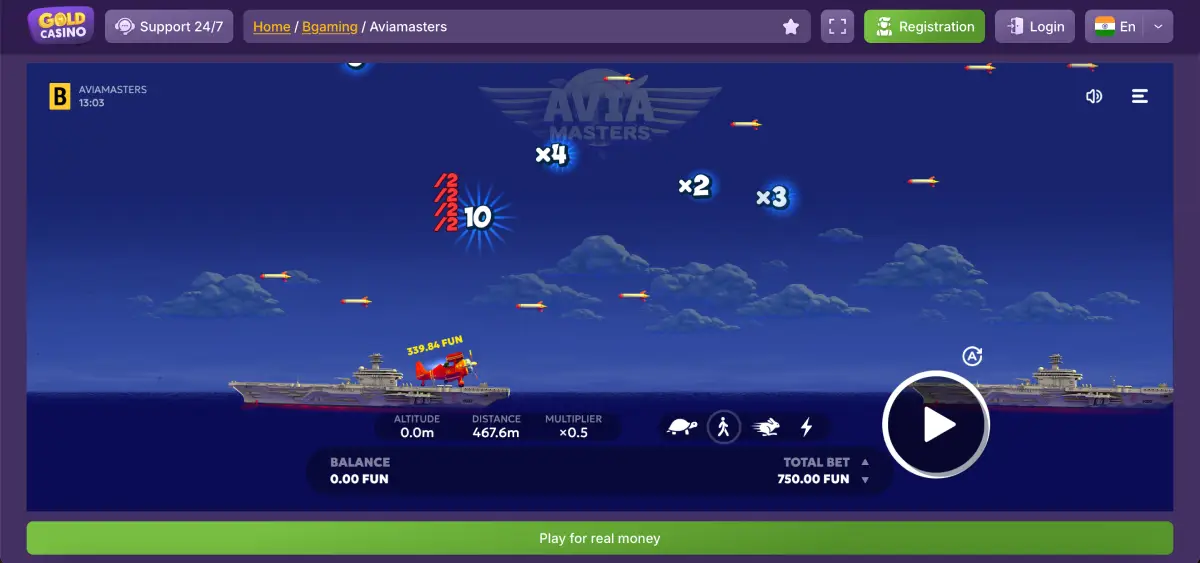
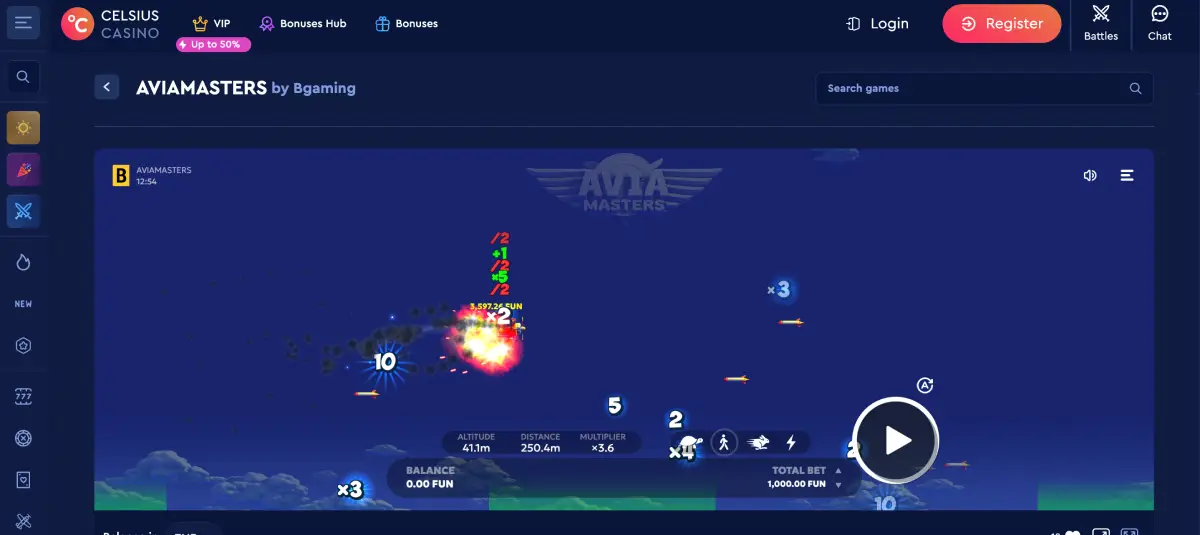
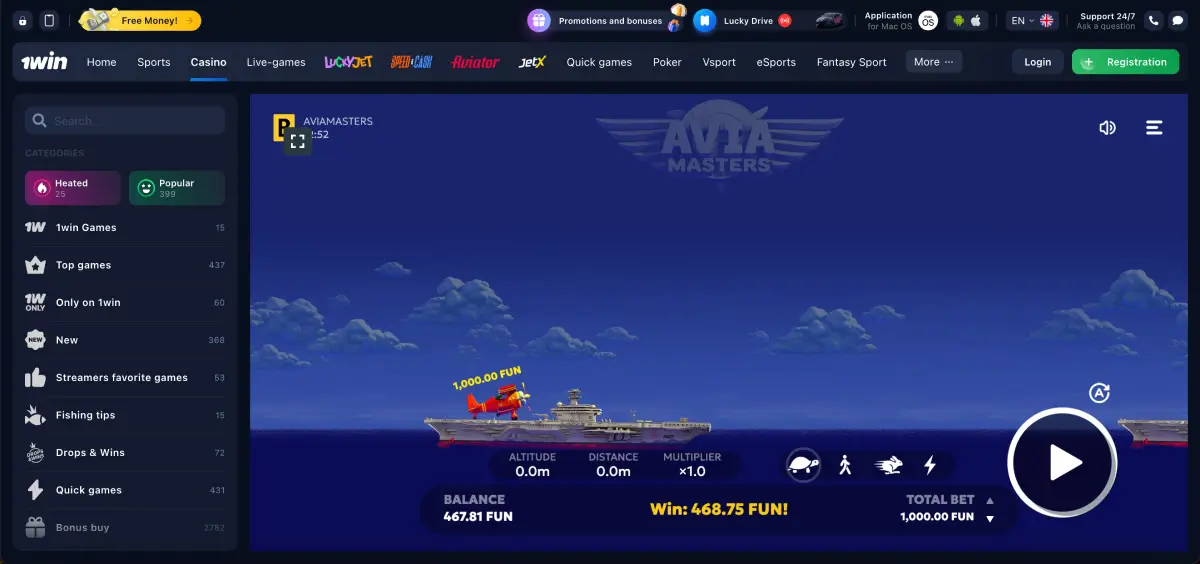
Avia Masters offers Tortoise, Man, Hare and Lightning settings. These buttons change how quickly the action is presented rather than the mathematical return.
- Tortoise: the slowest option, useful while learning the multiplier, rocket and landing displays.
- Man: a moderate pace that leaves more viewing time than the two fastest modes.
- Hare: a quick presentation suited only when every control is already familiar.
- Lightning: the fastest sequence, with little time to reconsider an input.
Faster rounds can increase the number of stakes placed in a short period. Someone who plans a time-based session should therefore add a round-count cap; otherwise Lightning mode may spend the budget sooner even though each stake is unchanged.
Build the session budget backwards
Start with an amount that can be lost completely without affecting bills, savings or debt payments. Then divide it by the maximum number of rounds. The result is a stake ceiling, not a target that must be used every time.
- Choose the complete loss allowance for the session.
- Set a fixed number of flights before play begins.
- Divide the allowance by that number to find the largest equal stake.
- Lower the stake if optional second positions or bonus conditions add exposure.
- Stop when either the money boundary or round count is reached.
Do not enlarge the next stake because a rocket reduced the previous result or a flight failed. That is loss chasing: it raises the amount at stake without changing the probability of the next route.
Understand multiplier arithmetic
The following figures show how payout and net profit are calculated when a successful ship landing records the stated final multiplier. They are arithmetic examples, not forecasts.
| Stake | Multiplier | Payout | Net profit |
|---|---|---|---|
| $10 | 2.5x | $25 | +$15 |
| $20 | 3.0x | $60 | +$40 |
| $15 | 2.0x | $30 | +$15 |
Payout equals stake multiplied by the final eligible multiplier. Net profit then subtracts the original stake. A higher target produces a larger potential return, but it does not follow that the flight is more likely to reach it.
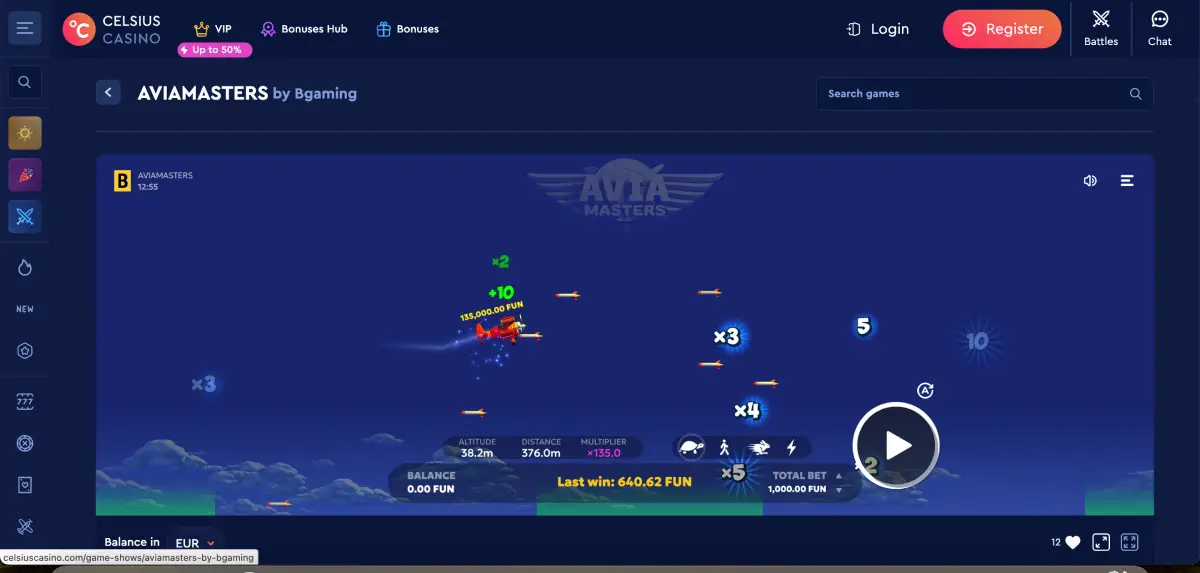
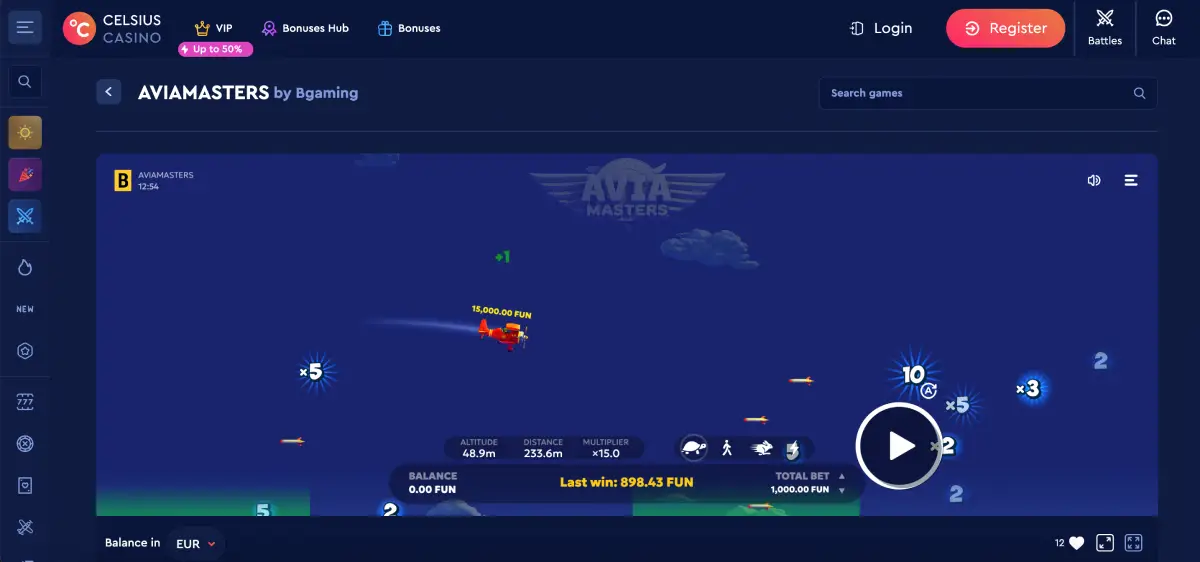
Avia Masters can add fixed values or multiply the running counter, while rocket contact may halve it. The order of events affects the displayed total. It does not create a repeatable pattern for the next round.
Single-position play keeps exposure visible
Using one stake per flight makes the session ledger easier to follow. Record the opening balance, the fixed stake, the number of rounds and the closing balance. Avoid changing several settings at once after a loss, because the effect on spending becomes harder to see.
Avia Masters has no selectable landing target or in-flight cash-out. After Spin, the plane completes the route automatically. Repeated small returns can be erased by water losses, and rare large outcomes do not compensate every player for earlier stakes.
Autoplay can repeat a fixed number of rounds and enforce stop conditions. It does not detect danger, choose a landing or know whether a rocket is about to appear.
Event-order example and its real effect
One stake moves through a sequence in which plain numbers add, values marked × multiply and rockets halve the current multiplier. Order can change the final total even when the same types of event appear.
| Event | Operation | Effect on the running value |
|---|---|---|
| Plain number | Add | Raises the multiplier by that number |
| Marked × value | Multiply | Multiplies the current total |
| Rocket | Halve | Cuts the current multiplier in half |
| Ship landing | Settle | Applies the final multiplier to the stake |
| Water finish | Lose | Loses the round stake |
Multiplication after an addition can produce a different running value from the reverse order. A later rocket can then reduce either result. The player cannot arrange the event sequence, so the arithmetic explains settlement without creating a strategy.
Only a successful arrival at the ship turns the remaining multiplier into a win. A high displayed total before a water finish does not create a partial payout.
Why session controls do not beat the RTP
A 97% RTP describes a theoretical return over a very large volume of play. It does not promise that a session receives 97% back, and no speed or Autoplay setting can force the short run to match that percentage.
Slower presentation leaves more viewing time, while automation can stop repetition at a chosen boundary. Neither changes addition, multiplication, rocket or landing probability. Across every interface setup, the game retains its built-in edge.
The x250 maximum discussed in the Avia Masters max-win analysis is an upper boundary, not a goal that becomes more probable after many low results.
Use history as a record, not a signal
Round history is useful for checking whether a result was recorded and for reviewing the pace of spending. It cannot forecast the next multiplier, rocket or landing.
- Several low results do not make a high flight overdue.
- A clean landing streak does not create a “hot” period.
- Repeated rocket events do not mean the next route must avoid one.
- A previous maximum does not reduce or increase the next flight’s chance.
Predictor applications and paid signal groups cannot know a certified future RNG output. They may simply recycle recent history, fabricate calls or expose account credentials. No external tool should be installed for this purpose.
Automatic play should enforce stopping rules
Autoplay accepts a round count and can stop on any win, when one win exceeds a chosen value, when the balance increases by a chosen value, or when the balance decreases by a chosen value. Its safest use is ending activity rather than accelerating a recovery attempt.
- Set the maximum automatic rounds below the session cap.
- Add a stop-loss that preserves part of the available balance.
- Choose a stop-win and leave when it triggers.
- Use the slowest suitable speed while checking the configuration.
- Remain present and inspect any interrupted-round record.
Never increase stakes automatically after losses. A progression multiplies exposure during an unfavourable sequence and eventually meets either the balance limit, stake limit or personal loss boundary.
Demo drills that teach useful habits
Virtual play is well suited to testing interface choices, not to proving profitability. Give each practice block one measurable purpose.
- Compare how much viewing time each speed allows.
- Locate balance, stake, multiplier and history information.
- Configure an automatic stop and confirm that it ends the sequence.
- Record combined exposure when using more than one position.
- Practise leaving at a round-count boundary regardless of the virtual balance.
Do not move to cash because a demo balance rose. Virtual results are generated independently and have no withdrawal value. A funded session also creates emotional pressure that a practice balance cannot reproduce.
Casino terms can change the plan
Game strategy and casino account rules are separate. A bonus may exclude crash games, reduce their wagering contribution or impose a maximum stake. Withdrawal limits and KYC also belong to the operator, not to BGaming’s flight mechanics.
Read contribution, expiry, wagering base and conversion limits before accepting a promotion. The Aviamasters casino checklist explains how to assess regional availability, operator identity and payout access before funding an account.
A simple pre-flight checklist
Write the answers down before opening a real-money round.
- What is the maximum complete loss for this session?
- How many flights are permitted?
- What is the resulting stake ceiling?
- Which pace leaves enough time to read every control?
- Which stop conditions will end autoplay?
- What time will the casino close regardless of balance?
If any answer changes because of a recent loss, end the session. Limits rewritten under pressure are not functioning as limits.
Responsible strategy
The only reliable long-term loss limit is not playing; every funded strategy can lose. Anyone who chooses to participate should use disposable entertainment money, avoid borrowing and keep casino funds separate from essential spending.
Real-money access is restricted to adults aged 18 or over. Stop if play causes distress, secrecy or attempts to recover money. Account controls, blocking options and support routes appear on the responsible gambling page.
Avia Masters strategy FAQ
These answers focus on speed, stake control, multiplier targets and the limits of any system.
What is the best Avia Masters strategy?
There is no profit-guaranteeing system. A fixed affordable budget, round cap, readable speed and firm stopping rules provide the most practical control.
Does Tortoise speed improve the odds?
No. It slows the presentation and gives more time to read the interface, but it does not alter random outcomes.
Can recent multipliers predict the next flight?
No. History records completed rounds and cannot reveal the next independently generated result.
Can a player choose when the plane lands?
No. There is no in-flight cash-out or landing control. The ship or water result is generated and resolved automatically.
Do plain numbers and × values work the same way?
No. Plain numbers are added to the running multiplier, whereas a value marked × multiplies the current total.
Can autoplay improve RTP?
No. Automation follows chosen instructions. It is useful for enforcing stops, not for changing the theoretical return.
Should a stake rise after a loss?
No. Increasing it to recover money magnifies exposure without making the next route more favourable.
Can demo results identify a winning setup?
No. Demo mode teaches the interface with virtual credits, but its results cannot validate future cash performance.
Note. Avia Masters rounds are decided by BGaming's certified random number generator. There is no cash-out button and no strategy, predictor or signal that changes the 97% RTP. Play only with money you can afford to lose. 18+.